Science · 6 min read
What bee venom (apitoxin) is and how it works on skin
Bee venom is a clear, bitter liquid produced by worker bees in the venom gland. It contains over 18 active compounds – peptides, enzymes and biogenic amines. Here is what they do in skincare.
Author: Milan Protić · Published: 1 September 2026
Definition
Bee venom (apitoxin) is a clear, slightly yellowish liquid with a bitter taste produced by worker honey bees (Apis mellifera) in the venom gland. One sting holds 0.02–0.4 mg of venom; one gram of dried venom takes 3,000–50,000 stings. After drying at about 40 °C the venom loses 70 % of its mass and is stored in a dark glass container.
What it is made of
The most important groups of compounds are:
| Compound | Share (dry matter) | Role |
|---|---|---|
| Melittin | 40–60 % | main peptide; dilates blood vessels, increases cell-membrane permeability |
| Phospholipase A2 | 10–12 % | enzyme; the venom's main allergen |
| Apamin | 2–3 % | peptide acting on nerve endings |
| MCD peptide (peptide 401) | 2–3 % | releases histamine from mast cells |
| Hyaluronidase | 1–3 % | enzyme that breaks down hyaluronic acid and eases penetration of other components |
| Biogenic amines (histamine, dopamine, noradrenaline) | < 1 % | contribute to redness and warmth |
What happens when venom meets skin
In the concentrations used in skincare, venom does not "break through" the skin like a sting. Melittin and hyaluronidase increase the permeability of the surface layers and stimulate micro-circulation: the skin flushes slightly, tingling and warmth are felt, then a tightening sensation. This response is why bee venom is sometimes called "natural Botox" – although the mechanism has nothing to do with botulinum toxin, which blocks muscles.
With regular use (8–12 weeks) users most often describe:
- smoother texture and a feeling of taut skin,
- less visible fine lines,
- a fresher complexion thanks to better blood flow.
What the research says
In an independent study of a bee venom serum conducted in South Korea, participants rated their skin over 12 weeks. The highest share of positive answers was recorded for "skin looks healthier and younger" and "improved appearance of fine wrinkles" – with the best results after 12 weeks. This was self-assessment, so the results should be read as an indication, not proof.
Bee venom is at the same time the least researched bee product: published papers are few and laboratory analyses expensive. That is why at Bees & Roses we tune the concentration from experience with our own venom and strictly follow the safety rules.
Safety
- People allergic to bee stings must not use venom products.
- An allergy can also appear in people who were not sensitive before – so do a 30-minute forearm patch test before first use.
- Not for children under 12, during pregnancy and breastfeeding, or with kidney and liver disease.
- Cosmetic products with venom are not medicines and do not treat diseases.
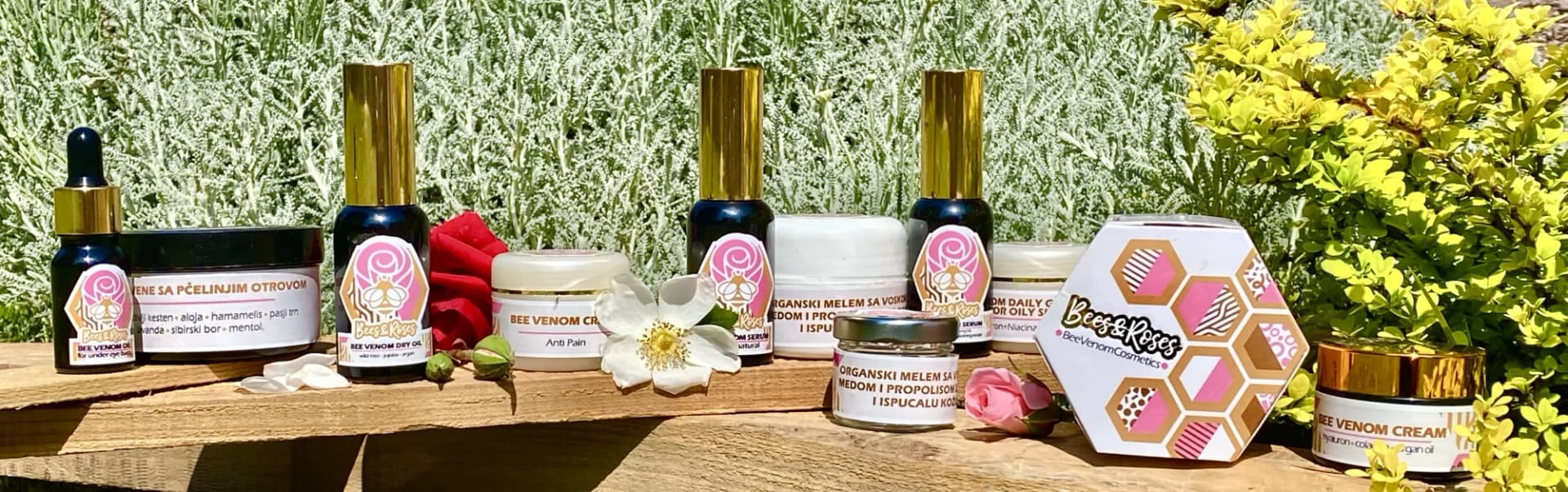
Venom dissolves in water, oil and honey – which is why you find it in our water serum, oils and creams.